
English| EUR
Suggested for you
More currencies
Choose a language
La Jolla Cove's snorkeling conditions shift hourly with tide, wind, and swell direction. Water clarity ranges from gin-clear fifteen-foot visibility to murky three-foot windows depending on overnight surge and morning offshore winds. Knowing what drives those changes turns guesswork into timing.
Quick answer
Snorkeling La Jolla conditions are calmest and clearest between 9:00 AM and noon on mornings following light overnight swell, when offshore Santa Ana winds suppress the marine layer and tide slack reduces surge. Visibility averages 10 to 15 feet during stable periods, dropping to 3 to 6 feet after storm swell or red tide events. Summer and early fall offer the most consistent windows, while winter brings larger surf and colder water that limit access.
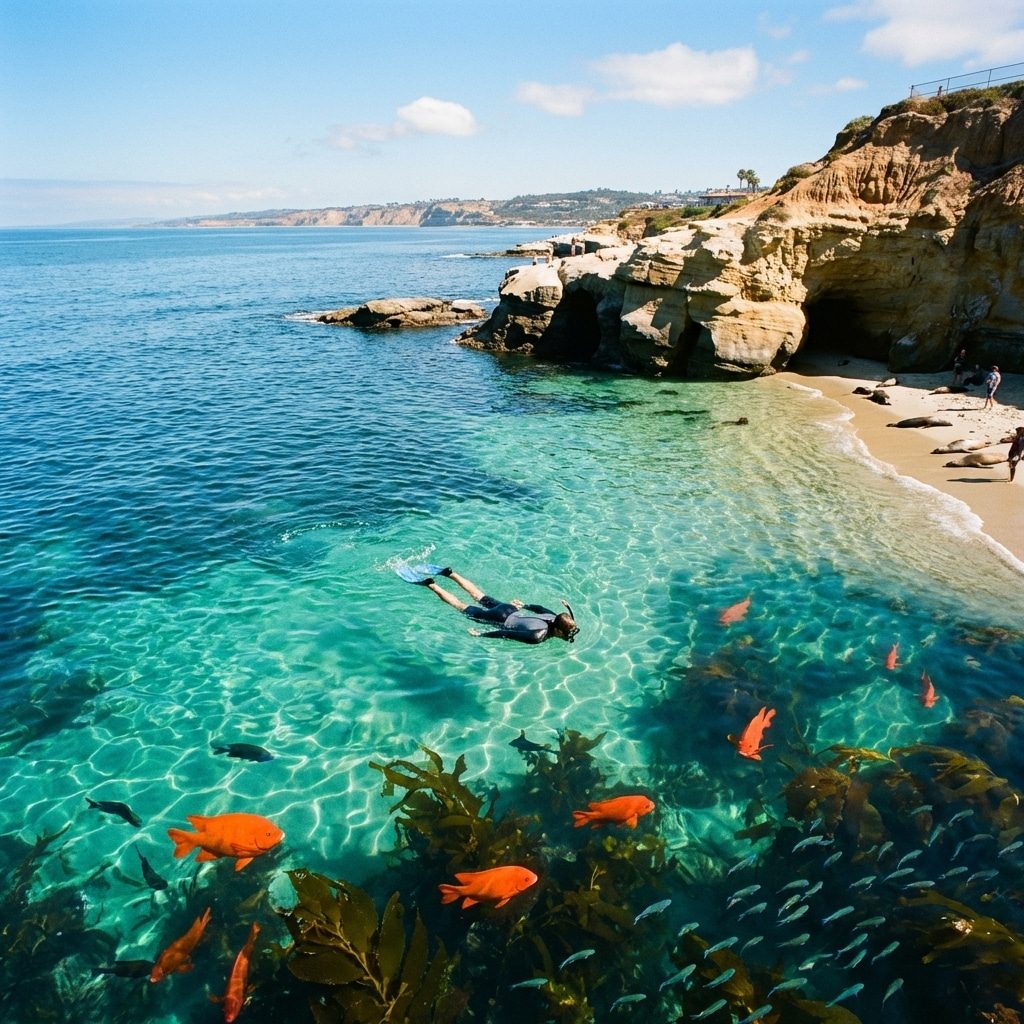
La Jolla Cove sits in a crescent-shaped kelp forest where the San Diego-La Jolla Underwater Park meets open Pacific swell, and that geography creates a narrow window of optimal snorkeling conditions. Water clarity depends on three variables: overnight swell height, morning wind direction, and the previous day's plankton bloom. A night of two-foot swell from the south stirs sand and kelp particulate that takes hours to settle, while offshore winds in the 5 to 10 knot range push surface chop seaward and compress the marine layer, leaving glassy water by mid-morning. Snorkeling la jolla conditions change fastest at the tide turn. Incoming tide pulls cooler, clearer water from offshore kelp beds into the cove, while outgoing tide drains warmer bay water that carries runoff and reduces visibility. The ecological reserve status prohibits fishing and limits boat traffic, so the clarity issues come from natural surge rather than human activity. Divers and snorkelers share the entry point at the east end of the cove, where a rocky shelf drops to sand at twelve feet—on calm days the bottom is visible from the surface, on rough days the entry itself is closed by lifeguard flag. Water temperature holds between 59°F in winter and 68°F in late summer, cold enough that most snorkelers wear at least a shortie wetsuit year-round. The cove's protected status means Garibaldi, leopard sharks, and bat rays occupy the same routes daily, and on high-visibility mornings their patterns become predictable. Local wind and swell reports update hourly through the San Diego lifeguard beach conditions line, and checking the forecast the night before reveals whether the next morning will offer the calm you need. La Jolla water conditions improve through autumn as summer upwelling settles and Santa Ana wind events increase. September and October deliver the year's longest stretches of offshore wind and small swell, creating multi-day windows when visibility holds above twelve feet and entry remains open all morning. Winter swell trains arrive from the northwest with period long enough to close the cove for days, making spring and fall the reliable seasons for planning a snorkeling visit without backup dates.
“On calm days the bottom is visible from the surface, on rough days the entry itself is closed by lifeguard flag.”
The best window for snorkeling at La Jolla Cove is 09:00–12:00, when visibility is highest and water conditions are calmest. Selecting the right time reduces exposure to afternoon winds and heavy visitor traffic.
Warm waters 68°F-72°F
These months offer the warmest ocean temperatures for extended snorkeling sessions.
Clearer water 65°F-70°F
Lower surge levels and reduced plankton growth significantly improve underwater visibility.
—
Mid-week hours provide the most space and avoid the peak intensity of weekend crowds.
Cooler waters 58°F-62°F
Expect cooler temperatures but often experience the clearest water conditions of the year.
Verdict: Plan your visit for weekday mornings between 09:00 and 12:00 during the months of September or October for the best balance of temperature and visibility.
La Jolla Cove is open to the public daily for snorkeling and recreational activities. The area maintains consistent operational hours throughout the week.
La Jolla Cove is located at 1100 Coast Blvd, La Jolla, CA 92037, United States. The most direct approach is by car via Interstate 5, exiting toward La Jolla Village Drive.
I-5 to La Jolla Village Drive, then follow signs for La Jolla Cove
Route 30 to La Jolla Blvd & Silverado St, then walk
Direct service to 1100 Coast Blvd
Parking in La Jolla is limited, particularly during weekends and summer months. Plan to arrive early or utilize public parking lots further inland to avoid lengthy searches for street parking near the water.
La Jolla's changing surf and marine life require proper gear and awareness to snorkel safely.
Everything you need to know about snorkeling la jolla conditions
To experience optimal snorkeling La Jolla conditions, arrive between 09:00 and 12:00. This window provides the best visibility and calmer winds before the typical afternoon increase in crowd size.
There is 0 USD for entrance to the cove area as it is a public beach. You can enjoy the marine reserve and its surrounding landmarks without any cost.
During your visit to the La Jolla underwater park, you may encounter vibrant Garibaldi, leopard sharks, and schools of baitfish. These creatures inhabit the protected reefs and kelp forests near the shore.
Snorkeling La Jolla Cove is a popular activity for families, provided participants are comfortable in the water. Local conditions can vary, so monitor the current surf report before heading into the ocean with children.
You will find that the best water clarity generally occurs during the morning hours. Following this schedule helps you avoid the choppier surface conditions that often develop later in the day.
High winds or swells can negatively affect snorkeling La Jolla conditions by reducing visibility and creating surge. It is important to check the local lifeguard reports for current water safety updates before your session.
The cove is located at 1100 Coast Blvd, La Jolla, CA 92037, United States. This central location serves as the main access point for those exploring the protected marine environment.