
English| EUR
Suggested for you
More currencies
Choose a language
La Jolla Shores and La Jolla Cove sit less than a mile apart but deliver fundamentally different snorkeling experiences. The Shores offers a wide sandy beach with gradual entry and calmer surf, while the Cove features rocky cliffs, deeper water, and denser marine life. Knowing which location matches your skill level and what you want to see underwater determines whether your visit succeeds.
Quick answer
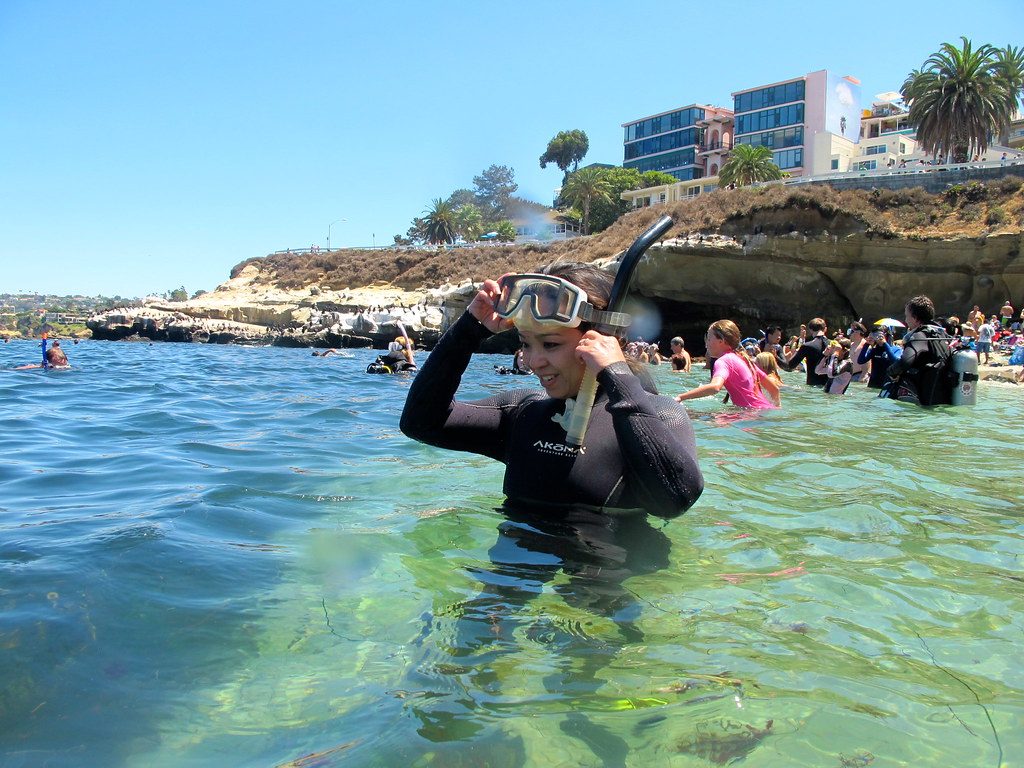
La Jolla Shores is a sandy, crescent-shaped beach at 8303 Camino Del Oro with free public access year-round and gentler conditions than the Cove. The underwater terrain consists of sand channels and eel-grass beds rather than the rocky reefs found at the Cove, making it ideal for beginners and families. Water visibility peaks during morning hours between 7:00 and 10:00 before afternoon wind stirs the sand.
The San Diego-La Jolla Underwater Park extends from the Shores to the Cove, but the two entry points sit on opposite ends of the ecological spectrum. La Jolla Shores spans nearly a mile of uninterrupted sand, sloping gently into the Pacific with a seafloor that stays shallow for hundreds of feet offshore. The Cove, by contrast, drops quickly from jagged rock into kelp forests and submarine canyons where the bottom falls away beyond recreational snorkeling depth. Snorkeling la jolla shores means entering through soft sand rather than tide pools, and the marine life reflects that difference. Leopard sharks patrol the sandy flats during summer and early fall, their spotted backs visible in water shallow enough to stand. Stingrays bury themselves in the sand, and schools of croaker and surfperch move through the eel-grass beds that fringe the beach. Garibaldi and rockfish, common at the Cove's reefs, appear only sporadically at the Shores because the habitat lacks the vertical structure they favor. The underwater park designation protects both zones equally, but what you encounter depends entirely on which threshold you cross. Wave energy at the Shores dissipates across the wide beach, leaving the surf zone calmer than the Cove's rock-funneled surge. First-time snorkelers and those traveling with children choose the Shores specifically for this predictability. The sandy bottom also means fewer opportunities to scrape against rock or disturb fragile reef organisms, reducing both injury risk and ecological impact. Visibility at the Shores fluctuates more than at the Cove because any swell stirs the sand into suspension, turning the water turbid within hours. A flat morning after several days without storm swell yields the clearest water, sometimes exceeding twenty feet of visibility. By afternoon, even on calm days, onshore wind roughs the surface and cuts clarity. Both locations sit within the same marine protected area, and both remain open to the public at no charge. Parking at the Shores fills quickly during summer weekends, and the lot at 8300 Camino Del Oro serves beachgoers and snorkelers without distinction. Lifeguard stations operate year-round, and the guards monitor conditions in real time. If you arrive and find the Shores too rough, the Cove is a five-minute drive north, though it demands more advanced water skills and tolerance for deeper, colder immersion.
“The sandy bottom at the Shores means fewer chances to disturb fragile reef organisms, reducing both injury risk and ecological impact.”
La Jolla Shores and the adjacent La Jolla Cove are accessible to the public throughout the week.
Access to La Jolla Shores and La Jolla Cove is entirely public and does not require an admission fee. Visitors may enter both beach areas at no cost.
Verdict: A typical adult pays 0 USD to access the beach, with total costs depending only on optional gear rentals or professional tour bookings.
The best arrival window is 07:00–10:00, as mornings offer the best water visibility and calmest conditions before afternoon wind. Choosing the right time depends on whether you prefer the sandy entry of La Jolla Shores or the rocky, marine-rich environment of La Jolla Cove.
68°F–72°F water; calm seas
Warm water attracts more visitors to both locations.
58°F–62°F water; potential swell
Visibility can be higher, though water temperatures are lower.
—
This is the ideal time to avoid crowds at the beach access points and ensure calm water for snorkeling.
Verdict: For the best balance of visibility and solitude, target weekday mornings during the months of April or October.
La Jolla Shores is located at 8303 Camino Del Oro, La Jolla, CA 92037. It is distinct from the rocky La Jolla Cove and is best accessed by private vehicle or local bus services that connect to the La Jolla village area.
Take I-5 to La Jolla Village Drive, proceed west to Torrey Pines Road, and follow signs for La Jolla Shores Drive.
San Diego MTS Route 30 to La Jolla Blvd & Pearl St, then transfer or walk.
Walk from the main La Jolla Shores parking lot at the end of Camino Del Oro.
Parking at the beach lot fills rapidly; arriving early is necessary to secure a space near the entrance. If the main lot is full, street parking is available on nearby residential side streets.
La Jolla Shores sits within the San Diego-La Jolla Underwater Park Ecological Reserve, where state regulations protect marine life and habitat. Visitors share the water with leopard sharks, rays, and protected species year-round.
Everything you need to know about snorkeling la jolla shores
La Jolla Shores offers a sandy, shallow entry ideal for beginners and families, while La Jolla Cove provides a more rugged, rocky environment perfect for observing abundant marine life in deep water. Choosing the right spot ensures your La Jolla marine reserve excursion matches your skill level and comfort. Visitors often find that snorkeling la jolla shores provides a gentler experience compared to the cliff-lined Cove. Understanding these local aquatic landmarks helps you select the right tour for your needs. There is no entrance fee for either beach, as they are public spaces accessible to everyone. You only need to consider costs if you choose to join a guided snorkeling tour or rent equipment from local providers. The public beach at the Shores remains open to all visitors at no charge. The best arrival window is between 07:00 and 10:00 to take advantage of calmer waters and higher visibility. This timeframe allows you to enjoy the Pacific coastline before afternoon winds increase swell height. Most experienced divers recommend this early morning period for the clearest view of the seafloor. Yes, the protected ecological reserve is home to bright orange Garibaldi, leopard sharks, and schools of opaleye. Swimming in these nutrient-rich waters offers a high chance of spotting diverse sea creatures in their natural habitat. Respecting the sanctuary rules ensures these habitats remain protected for future visitors. While many visitors explore independently, guided excursions provide safety instruction and essential gear for those new to the activity. These tours often emphasize safe navigation of the kelp forests and rocky reefs found throughout the area. Look for tour operators that focus on ocean conservation and local wildlife education. While the beach itself does not require a reservation, popular tours and equipment rentals frequently book up in advance. Securing your spot early ensures you have the necessary snorkel gear and professional guidance for your outing. Checking availability for local services ahead of time is a smart way to streamline your day.