
English| EUR
Suggested for you
More currencies
Choose a language
Each summer, hundreds of leopard sharks migrate into the shallow bays between La Jolla Shores and the Cove, creating one of California's most accessible marine wildlife encounters. This guide covers the seasonal window, the sand channels where they concentrate, and the conditions that bring the best visibility.
Quick answer
Leopard sharks gather in La Jolla's shallow waters from late June through early October, with peak numbers in July and August. The aggregation occurs in sand flats and channels between La Jolla Shores and the Marine Room, typically in water four to eight feet deep. Morning entry between 6:00 and 10:00 delivers the clearest water and calmest surf, and the beach and park area are free to access year-round.
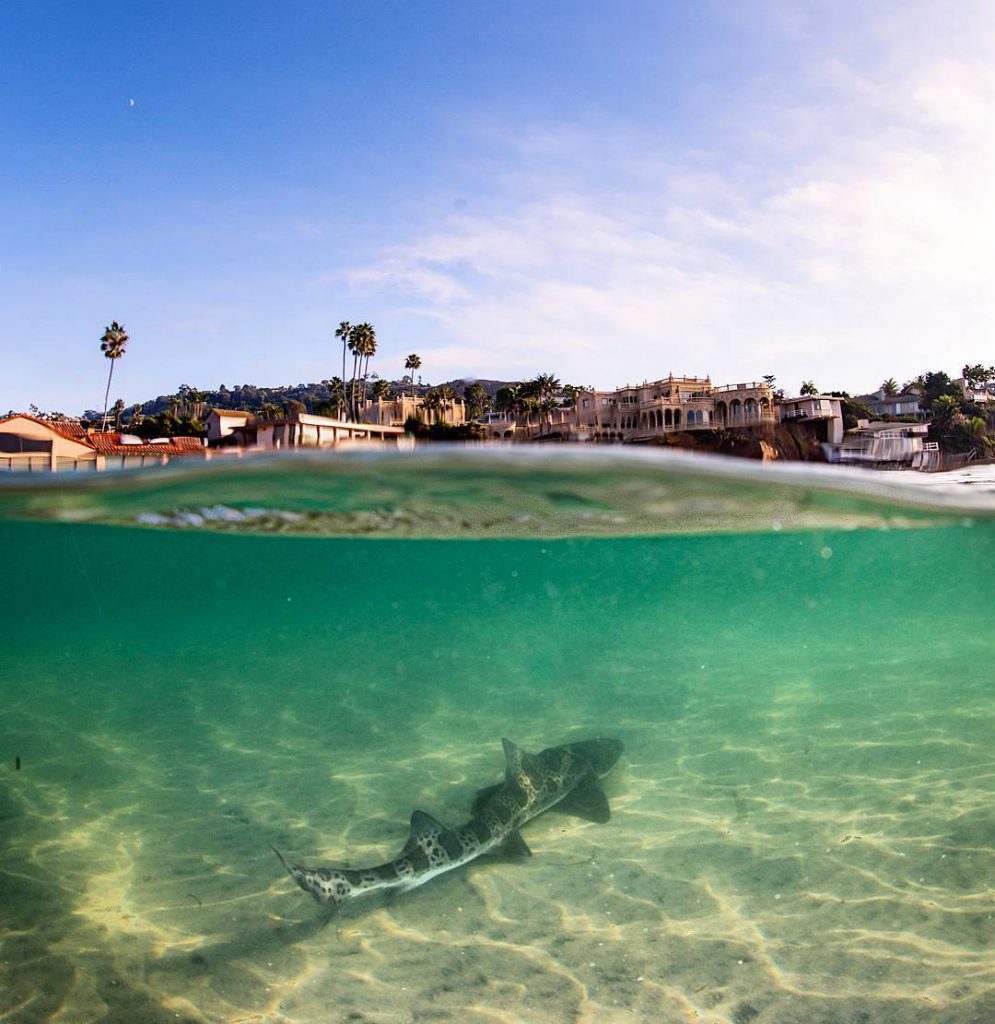
The leopard sharks that visit La Jolla each summer are pregnant females, drawn to the warm, protected shallows to give birth. Water temperature governs their arrival: when the nearshore zone climbs above 65 degrees Fahrenheit in late June, the first individuals appear, and by mid-July the congregation peaks at several hundred animals spread across the sandy bottom. They remain through September, then disperse as autumn temperatures drop. The phenomenon is predictable but not guaranteed—El Niño years bring earlier arrivals, while cooler springs can delay the season by weeks. Snorkeling la jolla leopard sharks requires no boat, guide, or reservation. The sharks occupy the same habitat every year: a crescent of sand that runs north from the Marine Room restaurant toward Scripps Pier, bordered on the west by eelgrass beds and on the east by deeper channels. Entry is easiest at La Jolla Shores Beach, where the sandy slope and gentle shore break allow swimmers to wade out and begin scanning the bottom within minutes. The sharks rest on or glide just above the sand, their spotted backs providing near-perfect camouflage until movement or a shift in light reveals them. Visibility determines the quality of the encounter. Morning light penetrates cleanest before wind and wave action stir sediment, and the early window also avoids the midday beachgoer surge. A incoming tide pushes clearer offshore water into the shallows, while outgoing flow can carry particulate from the bay. The sharks themselves are docile—they feed on invertebrates buried in sediment, not fish or swimmers—but they will move off if approached too quickly or cornered against the eelgrass. Finning slowly parallel to the bottom, pausing frequently, and allowing the sharks to set the distance yields longer, closer observation. The La Jolla leopard shark aggregation is the largest documented gathering of the species on the U.S. Pacific coast. Marine biologists have tagged and tracked individuals returning to the same shallow zone across multiple summers, confirming site fidelity. For snorkelers, the experience delivers a rare combination: a large, wild animal in its natural environment, accessible from shore, predictable in season, and entirely unbothered by quiet human presence. The conditions that concentrate the sharks here—warm water, soft substrate, nearby eelgrass nursery habitat—also support bat rays, round stingrays, shovelnose guitarfish, schools of juvenile surfperch, and foraging seabirds, layering the shallow ecosystem with activity that changes by the hour and the tide.
“The leopard sharks that visit La Jolla each summer are pregnant females, drawn to the warm, protected shallows to give birth.”
Leopard sharks are most prevalent in the warmer waters of late summer and early autumn. Visitors should target the 06:00–10:00 arrival window to experience the calmest water conditions and optimal clarity for snorkeling.
Water temperatures reach 70–72°F
Warmest water encourages higher leopard shark presence near the shore.
Water temperatures around 68–70°F
Conditions remain favorable for sightings as water begins to cool.
—
Arriving during the 06:00–10:00 window provides the calmest conditions and avoids afternoon congestion.
Verdict: The best time to snorkel is between August and September during the 06:00–10:00 arrival window.
Observing leopard sharks requires calm movement and respect for marine life. The process takes 45–60 minutes from entry to exit and prioritizes minimal disturbance to the sharks.
Wade in from the sandy beach rather than the rocky cove entry. The gradual slope lets you adjust to water temperature and spot sharks before reaching deeper water.
Move along the coastline in waist-deep water before heading out. Many visitors swim directly offshore and miss the sharks that patrol the shallows near the sand channels.
Use slow, deliberate fin kicks and avoid sudden direction changes. Fast or erratic movement triggers their flight response and they'll leave the area.
Stay at least 6 feet away and never reach toward them. Leopard sharks rest on the bottom during summer months and touching them is both illegal and stressful to the animal.
Keep fins elevated when sharks are below you. Accidental contact from fins is the most common disturbance, and silty kick-ups reduce visibility for everyone.
Return to La Jolla Shores using the sandy beach exit. The cove's rocky exit becomes slippery with algae and requires sure footing that's difficult in fins.
La Jolla Cove is accessible for snorkeling throughout the entire week. While the area is open 24 hours a day, snorkeling activities are concentrated during daylight hours.
La Jolla Cove is located at 1100 Coast Blvd, La Jolla, CA 92037. Driving via I-5 and exiting at La Jolla Village Drive or Ardath Road is the most common approach for visitors.
I-5 to La Jolla Village Drive
MTS Route 30 to La Jolla Blvd & Genter St
Walk from Coast Blvd parking areas
Parking in the immediate vicinity is limited and fills quickly, so consider utilizing street parking further up the hill on residential streets and walking down to the shore.
Leopard sharks (Triakis semifasciata) congregate in the shallow waters of La Jolla to utilize the warm, protected environment for gestation and foraging. These docile creatures are a vital part of the local marine ecosystem and pose no threat to humans.
Adult leopard sharks typically measure between 3 and 5 feet long, making them relatively small compared to other shark species. They are easily identified by the dark, saddle-like spots along their backs.
Each leopard shark possesses a unique pattern of dark spots and blotches that act like a fingerprint. Researchers use these individual markings to track and identify sharks within the population.
Female leopard sharks aggregate in the shallow, warm waters of La Jolla during summer and early autumn. This thermal advantage helps accelerate the development of their embryos.
Leopard sharks are benthic feeders that primarily hunt along the seafloor. Their diet consists mainly of crustaceans, clams, small bony fish, and fat innkeeper worms.
These sharks are ovoviviparous, meaning they produce eggs that hatch inside the mother's body. After a gestation period of about 10 to 12 months, the female gives birth to live young.
Leopard sharks are extremely skittish and shy when encountering swimmers. There are no recorded unprovoked attacks on humans, as they prefer to avoid contact whenever possible.
By foraging on the seafloor, these sharks help regulate populations of small invertebrates and fish. Their presence indicates a healthy, functioning nearshore marine environment.
Everything you need to know about snorkeling la jolla leopard sharks
The best arrival window is 06:00–10:00 to ensure the best water clarity and calmest conditions. Visiting during these hours also helps you avoid the heaviest afternoon crowds at the shore.
Leopard sharks are docile creatures that generally avoid humans, making them safe to observe in their natural habitat. They are bottom-dwellers that prefer the sandy flats of the marine reserve.
There is no cost for entry to the beach and park area, as it is a public space. You can access the water at 1100 Coast Blvd, La Jolla, CA 92037 without paying an entrance fee.
The most effective method is to swim from the beach toward the shallow sandy areas near the cliffs where these fish congregate. Maintaining a calm and steady swimming pace increases your chances of a peaceful sighting.
Many beginners find this activity accessible, provided they are comfortable in the ocean and use proper safety gear. Staying within the designated cove area offers protected waters that are ideal for entry-level snorkeling.
While you can swim independently, many local operators offer guided shark snorkel experiences that provide gear and expert knowledge. These services help visitors locate prime viewing spots while ensuring environmental compliance.
You should bring a mask, snorkel, and fins to navigate the marine reserve effectively. Wearing a wetsuit is also recommended, as water temperatures in the Pacific can vary throughout the year.